

RECENT POSTS

08.October.2026
KELLYS 2026: LIGHTEST FULL-POWER E-BIKE SYSTEM IN THE WORLD - AND SO MUCH MORE!
0 Comments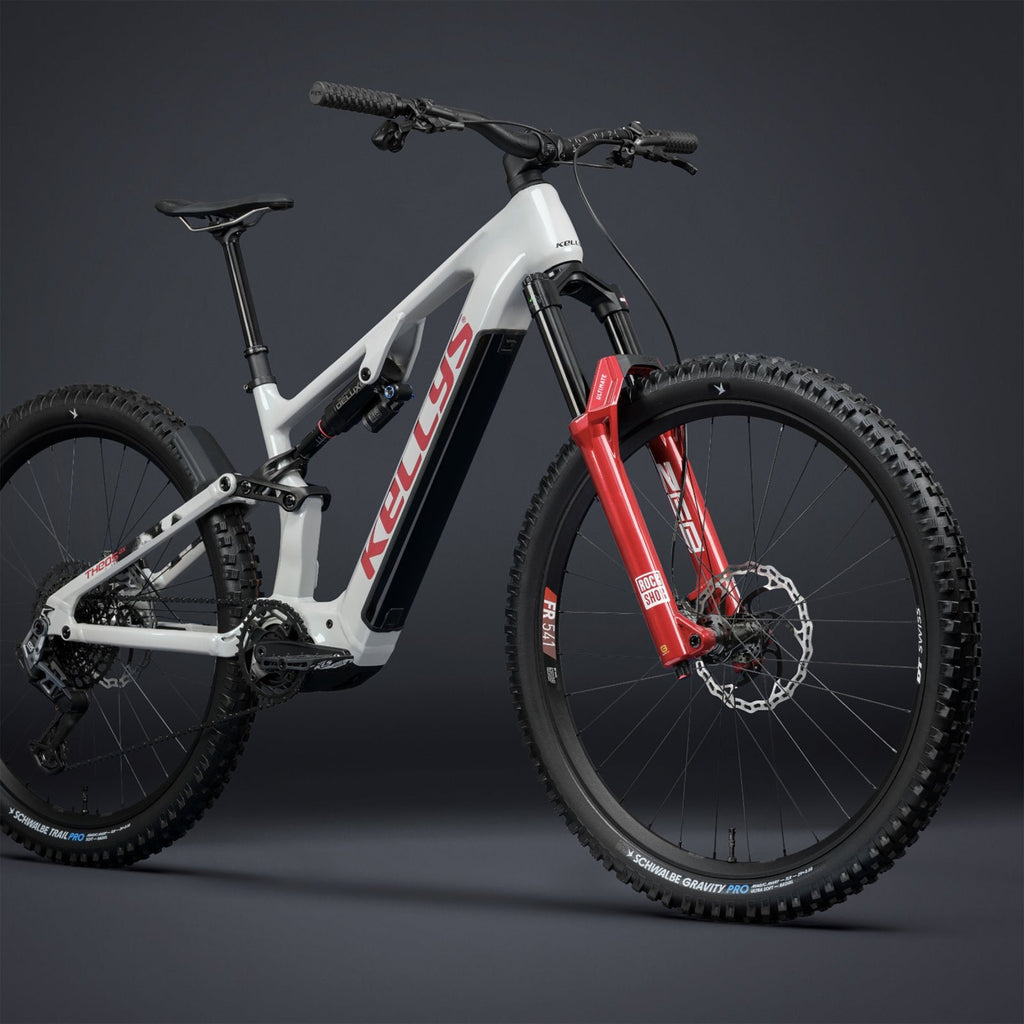
E-Bike Laws in Ireland: What Dublin Riders Need to Know
If you're thinking about buying an electric bike, or you already ride one around Dublin, the law is simpler than most people expect. A standard pedal-assist e-bike with a motor rated at up to 250 watts, which stops helping you at 25km/h, is treated the same as an ordinary bicycle in Ireland. That means no tax, no insurance, no licence and no registration.
Where people get caught out is with more powerful bikes, which the law treats as e-mopeds, and with the basics that apply to every cyclist, like lights. This guide goes through what the rules actually say, based on the Department of Transport and Road Safety Authority guidance that came into force on 20 May 2024.
What counts as an e-bike under Irish law
The rules come from Part 12 of the Road Traffic and Roads Act 2023. For a bike to count as an e-bike on a public road, it has to meet three technical conditions:
- A maximum continuous rated power of 250 watts or less.
- An electric motor that cuts off when you stop pedalling.
- Motor assistance that reduces and finally cuts off before the bike reaches 25km/h.
Cargo bikes that meet the same requirements are treated as e-bikes too. You can still ride faster than 25km/h under your own steam, for example going downhill. The motor just stops helping at that point.
Continuous power and peak power are not the same thing
The 250W limit is the continuous rated power of the motor, not its peak. When the rules came in there was some confusion about this, and the Department of Transport clarified that motors on legal e-bikes can briefly put out more power, for example on a steep climb. So a spec sheet that lists a high peak figure doesn't automatically make a bike illegal. What matters is the continuous rating, that it's pedal-assisted, and the 25km/h cut-off.
What you don't need: tax, insurance, licence or registration
Because a compliant e-bike is treated as a pedal cycle, it doesn't need to be registered, taxed or insured, and you don't need a driving licence to ride one. There's also no minimum age in law for riding a standard e-bike, although supervising younger children is still sensible.
Insurance being optional doesn't mean it's pointless. If you're spending real money on an e-bike, it's worth looking at theft cover, along with a good lock. That's your choice, though, not a legal requirement.
Where you can and can't ride an e-bike
An e-bike follows the same rules as a bicycle. In practice that means:
- Allowed: public roads, cycle lanes and bus lanes. Keep left, including in cycle and bus lanes.
- Not allowed: footpaths, pedestrianised areas and motorways.
If a bicycle isn't permitted somewhere, an e-bike isn't either. You also have to obey traffic lights (including bicycle lights), pedestrian, pelican and zebra crossings, traffic signs and any signals from a Garda or school warden. Using a mobile phone while riding isn't allowed.
Lights, helmets and hi-vis
Lights are a legal requirement
This is the one most people overlook. By law your e-bike must have front and rear lights, and they have to be switched on during lighting-up hours and in darkness. On a winter commute in Dublin, that covers a big part of the day. Plenty of e-bikes come with lights built in and powered by the main battery, but if yours doesn't, a set of rechargeable bike lights sorts it out.

Helmets and hi-vis are advised, not required
For a standard e-bike, a helmet and high-visibility clothing are strongly recommended but not legally required. Bear in mind an e-bike gets you up to speed quicker than a normal bike, and you can easily be riding close to 25km/h in traffic for much of your journey. A decent cycling helmet is a small cost next to the bike itself.

Drink and drugs
You can't ride an e-bike under the influence of an intoxicant. According to the RSA, anyone charged with this offence faces a court appearance and a fine of up to €2,000.
When an e-bike becomes an e-moped
If a bike doesn't meet all three e-bike conditions, it isn't legally an e-bike. It's an e-moped, and different rules apply. There are two main categories:
- L1e-A: continuous power up to 1,000W, with a maximum speed of 25km/h. These can be pedal-assisted or throttle-powered.
- L1e-B: continuous power up to 4,000W, with a maximum speed of 45km/h. This is moped territory.
The RSA's guidance is that pedal-assisted e-mopeds don't require insurance, but throttle-assisted e-mopeds that go above 25km/h must be insured. The requirements for e-mopeds are more involved than for e-bikes, so if you're looking at anything more powerful than a standard e-bike, read the RSA guide to e-bikes and e-mopeds and talk to your insurer before you buy.
Derestricted bikes
Some riders fit kits or change settings to remove the 25km/h limit. Once the motor keeps assisting above 25km/h, the bike no longer meets the definition of an e-bike, so it's no longer treated as a bicycle. The same goes for a throttle that drives the bike without pedalling. If you want more speed, it's better to buy a bike in the right category than to modify one that was built as a legal e-bike.
How to check an e-bike is legal before you buy
The RSA advises buying from a reputable retailer or distributor and checking a few things:
- The bike is CE marked, with the manufacturer, date of manufacture and serial number on its CE plate.
- It comes with a Declaration of Conformity, signed by the manufacturer, confirming it complies with the Machinery Directive and the relevant standards.
- The spec sheet confirms the continuous rated power, the assistance cut-off speed and whether there's a throttle.
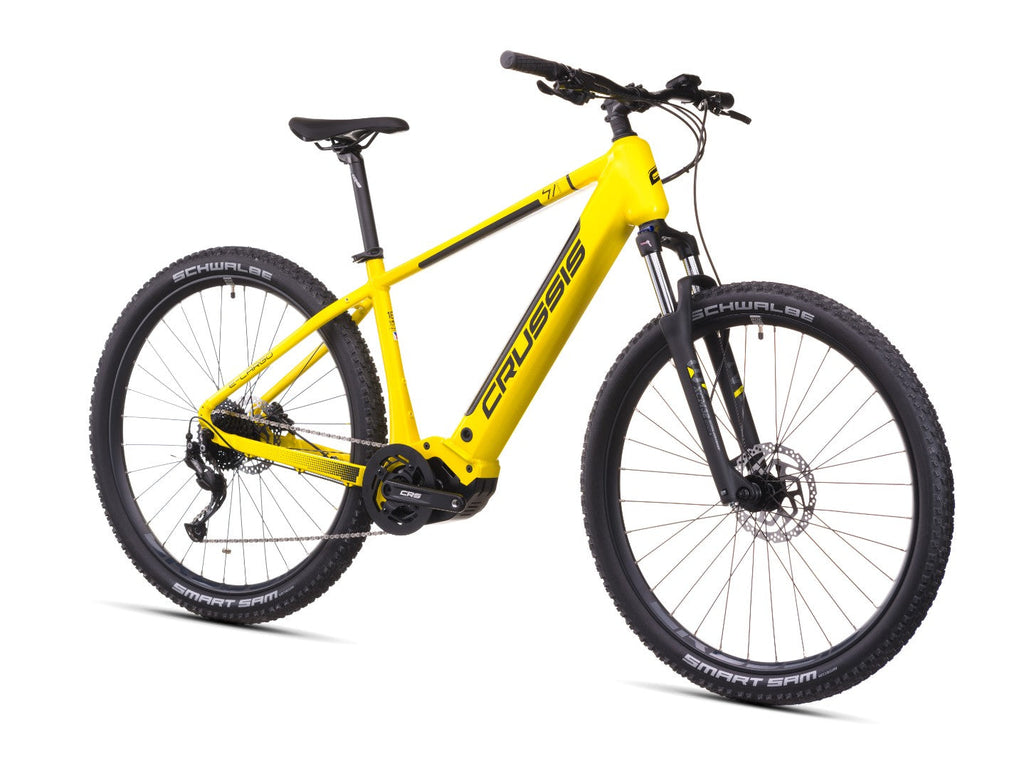
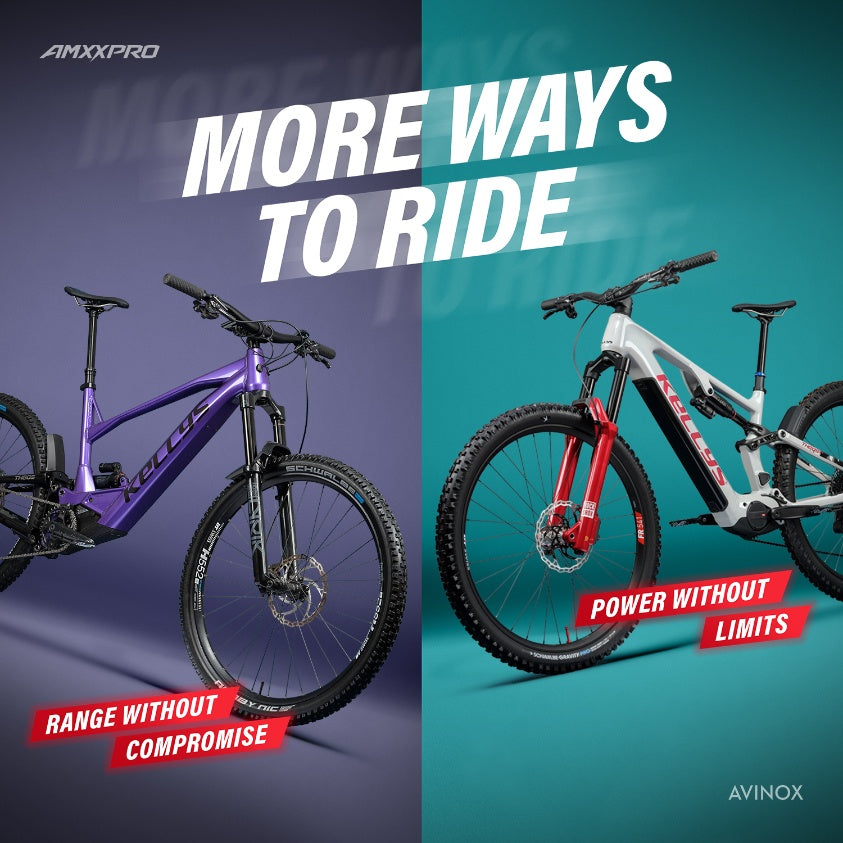
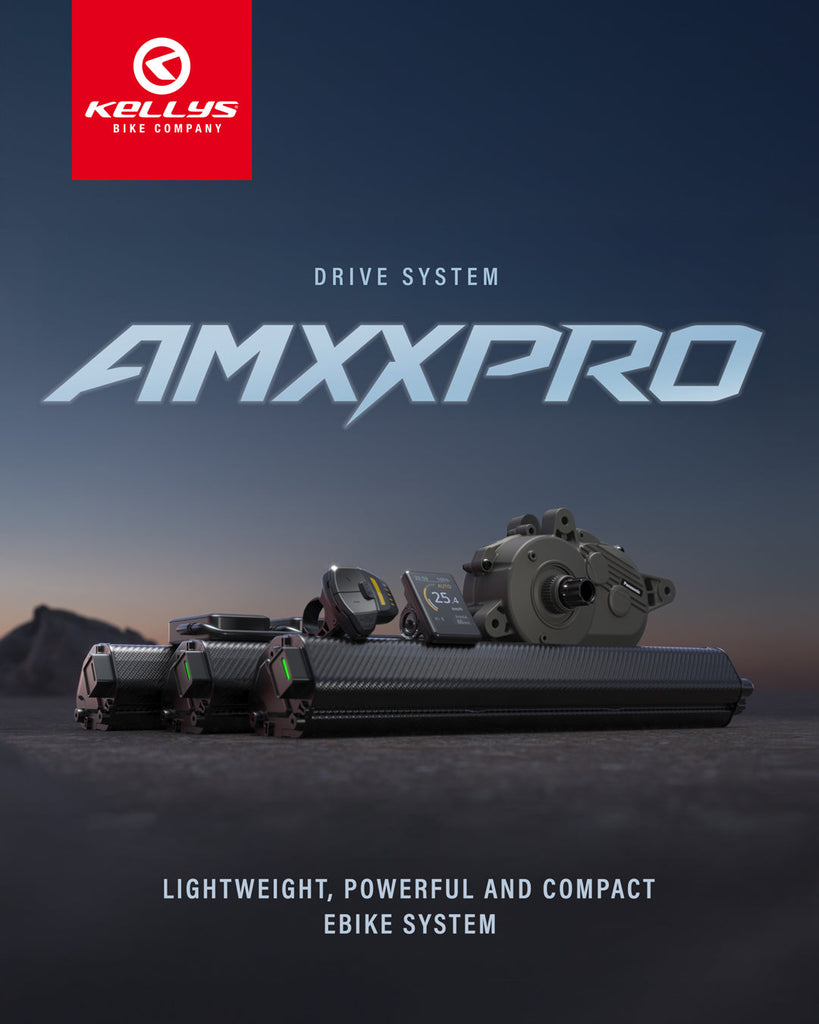
Buying online from a seller you don't know makes all of this harder to check before the bike arrives. Our electric bikes include Crussis and Kellys models with Panasonic and Avinox motors, and we're happy to go through the spec of any bike with you, along with the right size and setup for your routes.
Keeping your e-bike road legal
A bike that was legal on the day you bought it still needs looking after. Lights that work, brakes that stop you properly and tyres in good condition all matter more on an e-bike, because it's heavier and you'll usually be riding it faster and further than a normal bike. Our Dublin 8 workshop handles e-bike servicing and repairs, including Bosch diagnostics, and you can see the current prices on our bike servicing page.
If you're weighing up an e-bike for getting to work, it's also worth knowing we're approved for the Bike to Work Scheme. Call into the shop on Cork Street and we'll talk you through the bikes, the paperwork and anything about the rules you're still not sure of.
